How AI Agents Are Changing Video Editing Workflows for Digital Marketing Teams
nishant
Digital Triangle
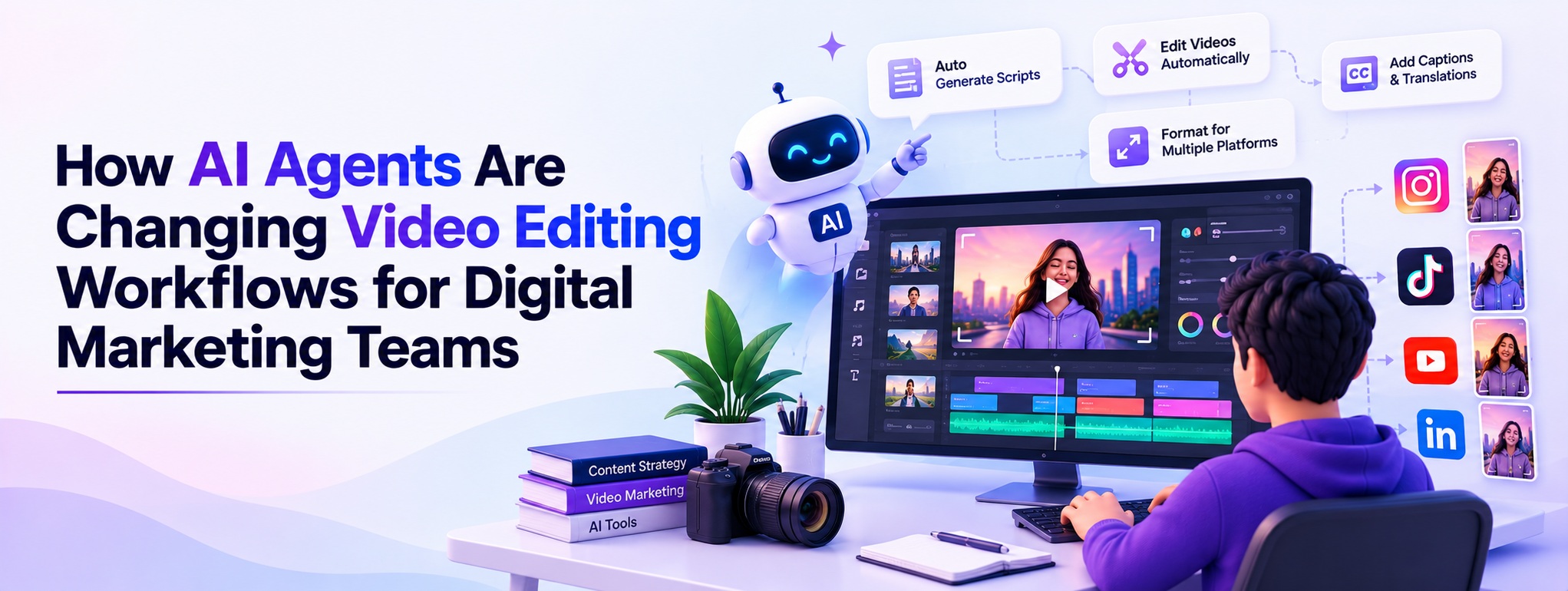
Video content has become an essential part of digital marketing. From Instagram Reels and YouTube Shorts to product demonstrations and paid advertisements, brands need engaging videos tailored to different audiences and platforms.
However, producing these videos consistently comes with challenges. Marketing teams must manage footage, editing, captions, audio adjustments, multiple formats, and client revisions, often while working with tight deadlines.
This is where AI agents are changing video editing workflows.
Unlike basic AI tools that automate individual tasks, AI agents can interpret instructions, interact with connected editing software, and execute multiple actions within a workflow.
For digital marketing teams, this means less time spent on repetitive editing and more opportunities to focus on creativity, strategy, and campaign performance.
What Are AI Agents in Video Editing?
AI agents are intelligent software systems that can understand instructions, access compatible tools, and perform tasks toward a specific goal.
In video editing, these agents can help organize footage, create rough cuts, adjust audio, add captions, and prepare platform-specific video versions.
For example, a marketing manager could provide the following instruction:
"Create a 30-second promotional video using our product footage. Add a title at the beginning, include captions, lower the background music during the voiceover, and prepare a vertical version for Instagram."
An AI agent connected to a compatible editing platform can execute several operations without requiring the marketer to manually navigate every editing control.
How Are AI Agents Different From Traditional AI Editing Tools?
Traditional AI-powered editing tools typically focus on individual features, such as automatic subtitles, background removal, or silence detection.
AI agents take this further by coordinating multiple editing operations within a connected workflow.
Instead of manually applying each adjustment, marketing teams can provide instructions, let the agent perform supported tasks, and review the resulting changes.
Why Digital Marketing Teams Need AI-Powered Video Editing
Modern marketing campaigns require multiple video variations across different channels.
Consider a D2C skincare brand launching a new product. Its campaign might require:
A product demonstration video for its website.
Three Instagram Reels highlighting different benefits.
Two short advertisements featuring alternative opening hooks.
Customer testimonials for social media.
Horizontal and vertical versions for different platforms.
Creating these assets individually increases repetitive editing work and can slow campaign execution.
AI agents help simplify supported production tasks, making it easier to reuse existing content while maintaining consistent creative direction.
For teams building a structured content and social media strategy, agent-assisted editing can improve production capacity without reducing the importance of human creativity.
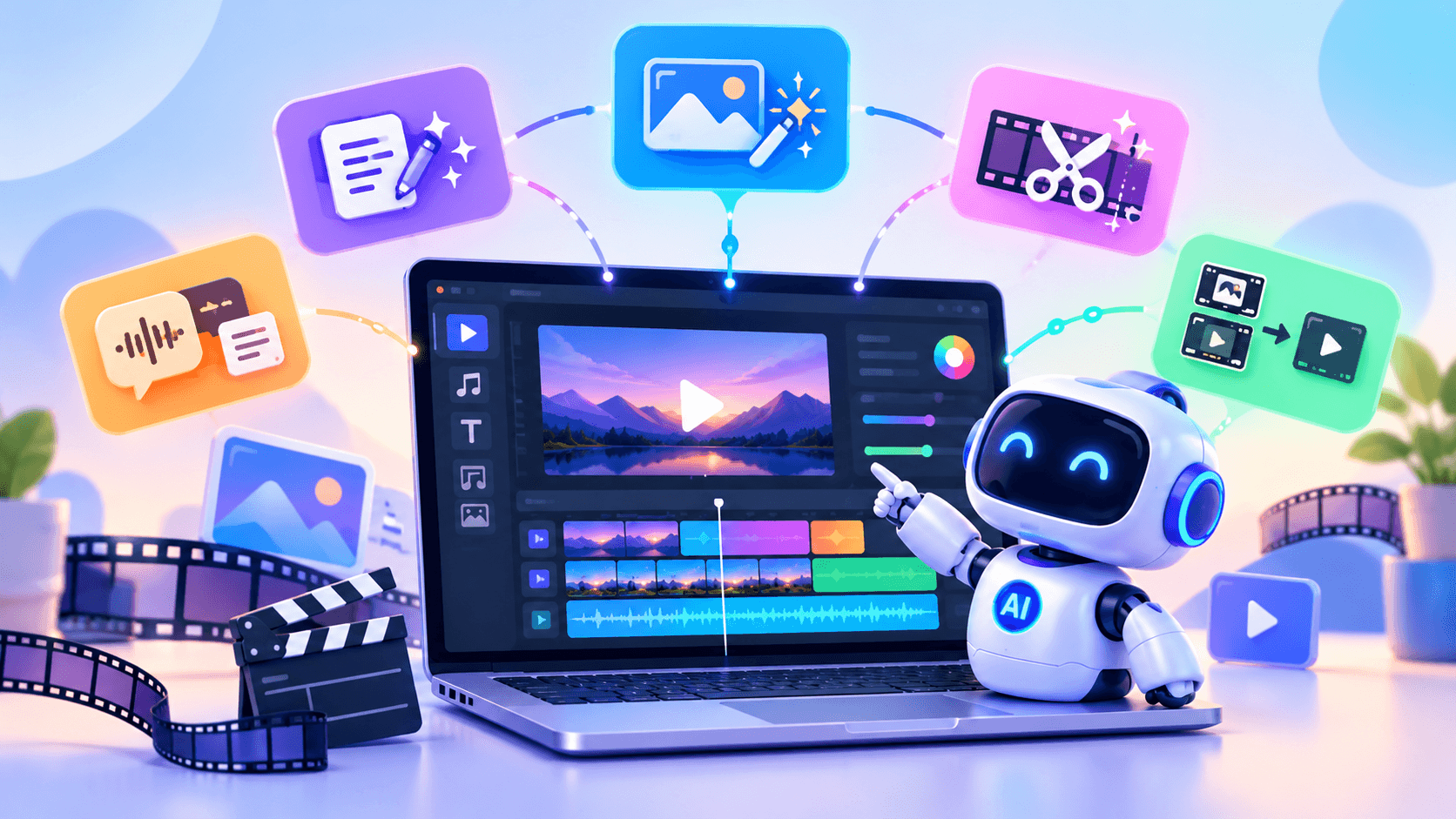
5 Ways AI Agents Are Transforming Video Editing Workflows
1. Accelerating Rough Cuts and Timeline Editing
Creating the first video draft often involves reviewing footage, selecting useful clips, arranging sequences, and removing unnecessary sections.
These tasks can take considerable time, especially when teams manage multiple campaigns.
AI agents connected to video editing software can assist with initial timeline assembly based on specific instructions.
For example, a marketer could request a 30-second product teaser featuring an opening title, selected demonstration footage, background music, and a closing call to action.
The agent can prepare the initial structure, allowing editors to focus on transitions, storytelling, and pacing.
This approach is particularly useful for marketing teams producing recurring video formats, including product highlights, testimonials, and promotional clips.
2. Simplifying Captions, Audio Adjustments, and Visual Consistency
Creating professional marketing videos involves more than arranging clips. Editors must manage subtitles, balance audio levels, maintain consistent colors, and ensure smooth transitions between scenes.
These tasks can become repetitive when producing content for multiple campaigns.
AI agents make this process more efficient by allowing marketers to describe editing changes in natural language rather than performing every adjustment manually.
For instance, invideo remote agents enable AI assistants such as ChatGPT, Claude, Codex, and Cursor to work directly within a professional video editing timeline through the Model Context Protocol (MCP). This allows users to connect their preferred compatible AI agent to invideo's editor and manage multiple editing tasks through simple instructions.
A marketer can ask an agent to add word-by-word captions, match skin tones across interview clips, reduce background music during voiceovers, or generate additional B-roll footage to improve the visual flow.
What makes this approach particularly useful is that the edits happen on an actual, editable timeline. Users can see cuts, titles, and transitions appear as the agent works, make manual changes alongside it, and maintain control over the final video.
Once editing is complete, teams can export a finished video or an editable project for Adobe Premiere Pro, Final Cut Pro, or DaVinci Resolve.
For digital marketing teams handling frequent campaign updates and revisions, this combination of automated editing and human collaboration helps simplify production while maintaining creative flexibility.
3. Making Multi-Platform Video Repurposing More Efficient
A video created for YouTube may also contain valuable content for Instagram, LinkedIn, and paid advertising.
However, effective repurposing requires more than changing video dimensions.
Editors must consider platform-specific aspect ratios, caption placement, pacing, opening hooks, and calls to action.
AI agents can simplify the technical work of preparing alternative formats and modifying existing timelines.
For example, a marketing team could transform a longer product demonstration into several short vertical videos, each highlighting a different customer benefit.
Rather than rebuilding every video, editors can work from existing footage and approved creative assets.
Human review remains important because each platform requires content adapted to its audience and viewing experience.
4. Supporting Faster Creative Testing for Advertising Campaigns
Creative testing helps performance marketers identify which messages and visuals resonate with their audiences.
Different hooks, offers, video sequences, and calls to action can influence campaign outcomes.
However, preparing multiple advertising variations manually can delay testing.
AI-assisted editing workflows make it easier to create alternative versions of approved video content.
For example, a marketing team could test three variations:
Version A: Opens with a common customer problem.
Version B: Begins with a product demonstration.
Version C: Highlights the primary product benefit immediately.
Marketers can evaluate these variations using click-through rates, conversion rates, and cost per acquisition.
While AI agents simplify creative production, campaign performance data and human judgment determine which variations deserve further investment.
5. Improving Collaboration and Reducing Revision Cycles
Video production usually involves marketers, editors, designers, creative strategists, and clients.
Even minor revisions can require multiple rounds of communication.
A client may request a shorter introduction, larger captions, reduced background music, or a different ending.
Agent-compatible editing systems allow some of these changes to be communicated through natural-language instructions.
This can reduce friction between marketers and editors while making routine revisions easier to execute.
Professional editors can then spend more time improving visual storytelling, composition, and brand consistency.
How to Build an AI-Assisted Video Editing Workflow
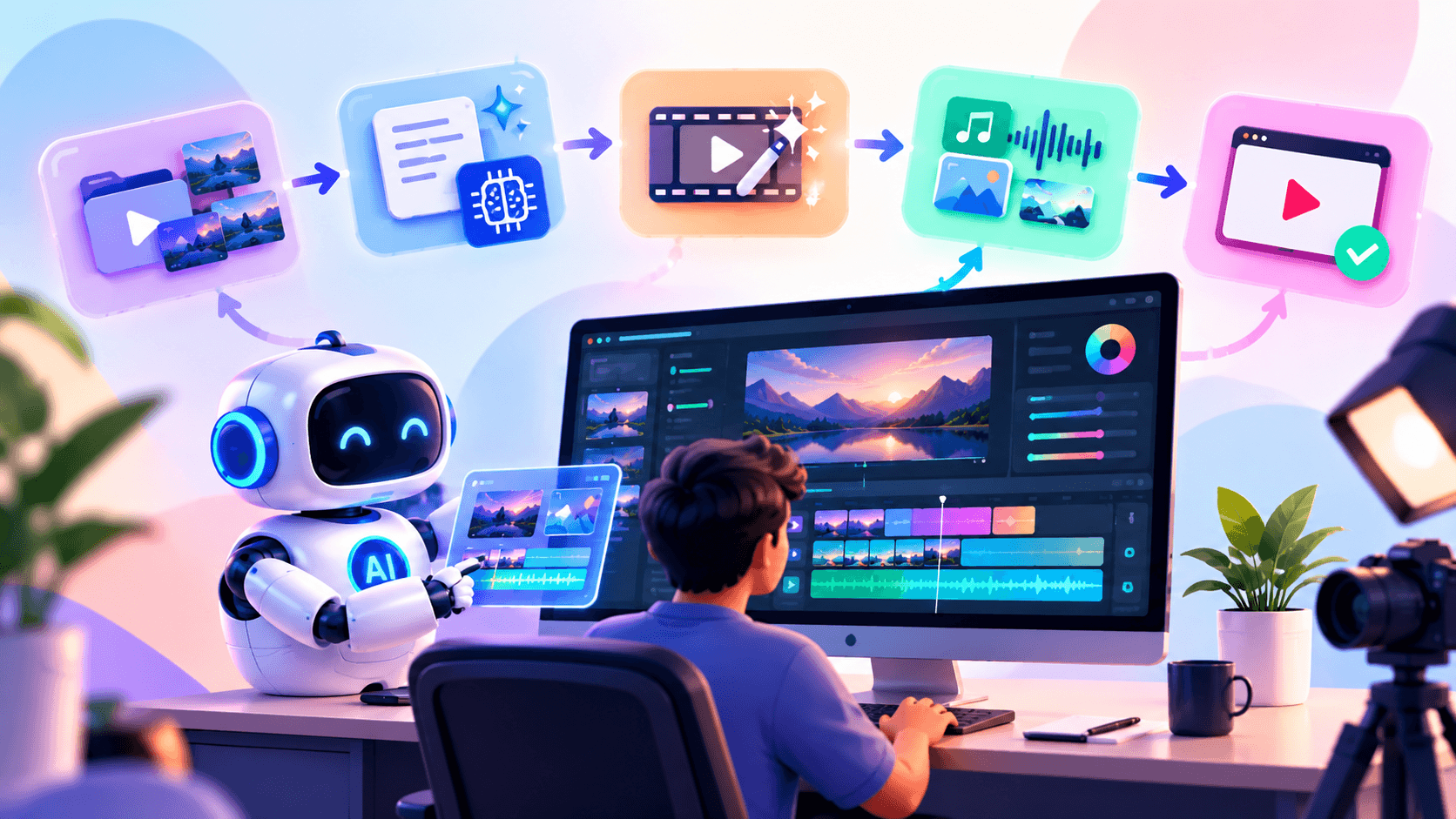
Adopting AI agents successfully requires more than connecting an AI tool to editing software.
Marketing teams need a clear process for assigning tasks, reviewing results, and measuring effectiveness.
Step 1: Create a Detailed Creative Brief
Start by defining the target audience, campaign objective, video duration, aspect ratio, brand guidelines, and call to action.
Include approved footage and references whenever possible.
Clear instructions help agents produce relevant edits and reduce unnecessary revisions.
Step 2: Identify Tasks Suitable for Automation
Begin with repetitive operations such as rough cuts, caption formatting, basic audio adjustments, and platform-specific resizing.
Keep complex storytelling and brand-sensitive decisions under human supervision.
Step 3: Review Every Edited Video
Check footage selection, caption accuracy, audio quality, visual consistency, copyright permissions, and promotional claims.
Every campaign asset should receive human approval before publication.
Step 4: Prepare Campaign Variations
Use approved footage and timelines to create versions for different audiences, platforms, and campaign objectives.
Optimize each variation for its intended viewing experience rather than simply changing its dimensions.
Step 5: Measure Workflow Performance
Track editing turnaround time, revision requests, production costs, and campaign results.
Compare these metrics against previous production processes to determine whether automation delivers measurable value.
Businesses exploring broader AI marketing automation solutions can also connect video production with campaign planning, content distribution, and performance reporting.
Challenges of Using AI Agents in Video Editing
Although AI agents offer practical benefits, marketing teams should consider several limitations before expanding their use.
Brand consistency: Automated edits may not always match established visual guidelines. Provide approved templates, typography, colors, and reference materials.
Accuracy and quality: Captions, audio adjustments, generated visuals, and promotional claims require verification before publishing.
Creative judgment: AI agents can execute instructions, but compelling storytelling and audience understanding remain human responsibilities.
Data security: Teams should review access permissions before connecting agents to confidential client footage or campaign materials.
Establishing clear approval checkpoints helps organizations adopt AI-assisted editing without compromising production quality.
The Future of Video Editing Is Human-AI Collaboration
AI agents are shifting video editing from a process built around individual manual operations toward workflows driven by instructions, connected tools, and collaboration.
For digital marketing teams, this creates opportunities to reduce repetitive work, simplify content repurposing, and prepare campaign variations more efficiently.
However, successful adoption requires a balance between automation and creative expertise.
Marketers must still understand their audiences, develop compelling messages, review edited content, and measure campaign performance.
The strongest workflows will combine AI-assisted production with human creativity, clear quality standards, and data-driven decision-making.
The future of video editing isn't about replacing creative professionals with AI. It's about helping marketing teams deliver stronger video campaigns through smarter, more efficient workflows.
Free Strategy Call
Want us to apply this to your brand?
Book a free 30-min call with our team and get a custom growth plan.
Book Free Call →