How Online Video Editors Are Transforming Social Media Content Creation for Marketers
nishant
Digital Triangle
Social media marketing has become increasingly video-focused. From Instagram Reels and YouTube Shorts to LinkedIn posts and product demonstrations, businesses rely on videos to connect with audiences, explain products, and promote their services.
However, producing videos consistently can be difficult for marketing teams. Editing footage, adjusting audio, adding captions, and preparing different versions for social platforms all take time.
Online video editors are making this process easier. These browser-based tools allow marketers to create and refine videos without depending entirely on complicated desktop editing software. Many now include AI editing features that help reduce repetitive work.
According to Wyzowl's State of Video Marketing 2026, 63% of video marketers have used AI tools to create or edit marketing videos, up from 51% in 2025.
As video production becomes part of everyday marketing, online editors are helping businesses manage content more efficiently while maintaining creative control.
What Are Online Video Editors, and Why Are They Important for Marketers?
Online video editors are browser-based platforms that let users upload footage, trim clips, arrange scenes, adjust audio, and prepare finished videos for publishing.
Unlike traditional desktop software, these platforms typically do not require complex installations. Marketers can access editing tools directly through a web browser, making video production more accessible to teams with different levels of technical experience.
This flexibility matters because social media campaigns often require quick updates and frequent publishing.
A business promoting a new product may need a demonstration video, a short teaser, a customer testimonial, and several promotional clips within the same week.
Creating each video separately can stretch production resources.
Online video editors help marketers manage these requirements through organized editing workflows, reusable footage, and AI-assisted features.
They also support broader digital marketing strategies by helping businesses connect video production with their ongoing content and campaign planning.
How Are Online Video Editors Changing Social Media Content Creation?
Online video editors are transforming video production by making common editing tasks faster and giving marketers greater flexibility over their content.
1. Making Video Editing Faster With AI Assistance
Traditional video editing requires creators to review footage, select clips, arrange sequences, and make several adjustments before exporting the final video.
When marketers handle multiple campaigns, these repetitive tasks can slow down production.
AI-assisted editing helps simplify parts of this process.
For example, invideo editor is a professional, browser-based video editor that combines a multitrack timeline with AI editing agents. Marketers can upload raw footage and assign editing tasks using simple instructions, such as finding specific moments, removing unwanted pauses, arranging clips, or matching the visual style across multiple shots. The AI agents carry out these changes directly on the timeline, allowing users to review, adjust, or refine every edit manually.
This approach is particularly useful for marketing teams producing product demonstrations, promotional videos, and short-form social media content.
Rather than spending time on every technical adjustment, marketers can focus more attention on storytelling, messaging, and campaign goals.
2. Repurposing Long Videos Into Short Social Media Clips
Creating fresh content for every platform can become expensive and time-consuming.
Online video editors make it easier to reuse existing footage and turn longer recordings into shorter, platform-specific videos.
For example, a company might record a 30-minute webinar explaining a new product.
Instead of publishing only the complete recording, the marketing team could create:
A 30-second Instagram Reel highlighting a product benefit.
A short LinkedIn video featuring an expert insight.
A YouTube Short answering a customer question.
A promotional clip introducing the full webinar.
Each video serves a different purpose while drawing from the same recording.
Marketers should select moments that make sense independently rather than cutting videos at random timestamps.
A strong opening, one clear message, and a relevant closing statement make repurposed videos easier to understand.
3. Maintaining Brand Consistency Across Social Platforms
Consistent branding helps audiences recognize a business across different channels.
However, videos created by different team members can sometimes have inconsistent fonts, colors, transitions, and audio styles.
Online video editing workflows help teams follow shared creative guidelines.
Marketing teams can establish standards for:
Brand colors, typography, and logo placement.
Caption styles and text positioning.
Introductory and closing sequences.
Background music and audio levels.
Visual pacing and transitions.
These guidelines help create a recognizable visual identity without making every video look identical.
Maintaining this consistency also supports long-term brand growth.
As explained in The Digital Triangle's approach to building brands, consistent identity, messaging, and creative execution help businesses develop stronger relationships with their audiences.
For marketers, online editing tools provide a practical way to carry that consistency into everyday video production.
4. Simplifying Collaboration and Content Reviews
Video production often involves content writers, marketers, designers, editors, and campaign managers.
When these teams exchange files through different platforms, feedback can become difficult to manage.
Some browser-based editors support shared projects and collaborative review, allowing teams to manage their work more efficiently.
For example, a marketing manager reviewing a promotional video might request a shorter introduction or a different product shot.
With a shared editing workflow, these changes can be communicated and reviewed without repeatedly rebuilding the project.
Clear communication also reduces unnecessary revisions and helps teams prepare campaign assets more efficiently.
How Can Marketers Create Better Social Media Videos Using Online Editors?
Online video editors provide useful editing tools, but successful social media content still depends on planning and execution.
Marketers can follow a structured workflow to improve video quality and campaign performance.
Step 1: Define the Video's Marketing Objective
Before editing, identify what the video needs to achieve.
A brand awareness video might introduce a product or explain a customer problem. A conversion-focused advertisement should communicate a clear benefit and encourage a specific action.
Marketers should determine the audience, main message, and desired outcome before selecting footage.
This helps keep the video focused and prevents unnecessary information from distracting viewers.
Step 2: Prepare Footage and Write a Clear Brief
Organize video clips, product images, voiceovers, and brand assets before starting the editing process.
A simple creative brief should explain the intended length, visual style, important scenes, and final message.
For example:
"Create a 30-second product demonstration. Start with the main customer problem, show the product in action, remove unnecessary pauses, and finish with a clear call to action."
Specific instructions help editors and AI editing agents understand the intended result.
Step 3: Build the First Cut and Refine the Story
Arrange the strongest footage into a logical sequence.
The opening should communicate value quickly, especially for audiences scrolling through social feeds.
Remove unnecessary introductions, repeated explanations, and scenes that do not support the main message.
AI assistance can help with the initial editing process, but marketers should review the results before publishing.
Check whether the visuals support the message, the audio is clear, and the overall pacing feels natural.
Step 4: Adapt Videos for Different Platforms
Social media platforms have different viewing habits and presentation requirements.
A vertical video may suit Instagram Reels or YouTube Shorts, while a LinkedIn campaign might benefit from a more informative opening.
Marketers should adjust framing, captions, video length, and calls to action based on the platform.
For instance, Meta's Reels advertising guidance recommends vertical 9:16 videos with quality audio and important visual elements positioned within safe zones.
Following platform-specific creative guidelines helps prevent important messages from being hidden or poorly displayed.
How Do Online Video Editors Help Reduce Marketing Production Costs?
Online video editors can help businesses reduce unnecessary production work, especially when teams regularly create and update content.
The biggest opportunity comes from improving existing workflows rather than simply replacing editing software.
For example, a company can record one product demonstration and prepare several shorter versions for different campaigns.
Similarly, a marketing team can update a promotional video when product information changes instead of arranging an entirely new recording session.
Potential benefits include:
Better footage reuse: Existing recordings can support multiple posts and campaigns.
Less repetitive editing: AI assistance can help with initial cuts and routine changes.
Simpler project management: Browser-based workflows can reduce unnecessary file transfers.
Faster campaign updates: Existing projects can be adjusted when messaging or offers change.
Actual savings depend on the editing platform, project complexity, and team requirements.
Businesses should measure editing time and production costs to understand the financial impact.
Which Social Media Video Formats Should Marketers Prioritize?
Choosing the right video format depends on the campaign objective and the audience's needs.
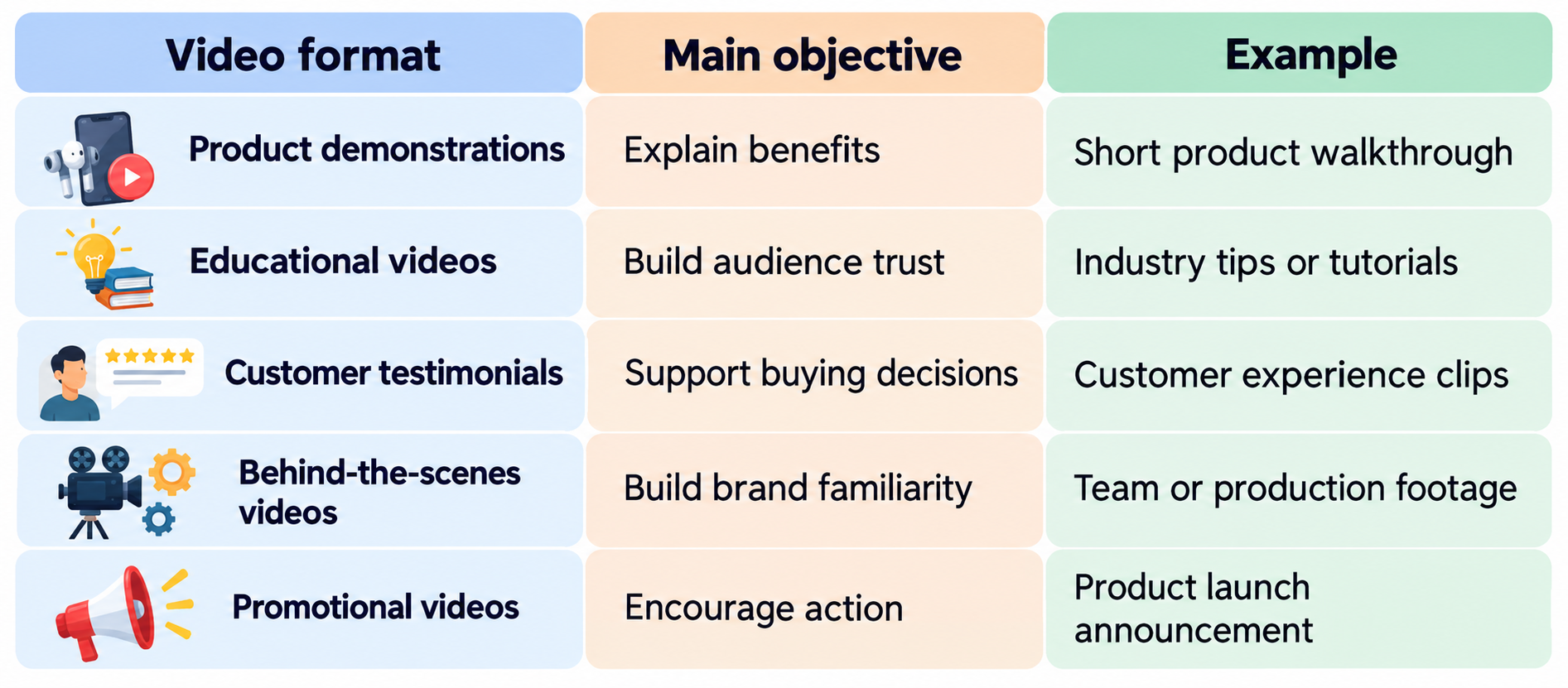
Marketers do not need to produce every format immediately.
A practical approach is to select two or three formats, publish consistently, and compare their performance.
Over time, engagement and conversion data can help identify which video styles deserve more production resources.
How Can Marketers Measure the Success of Social Media Videos?
Producing more videos does not automatically lead to better marketing results.
Marketers need to evaluate whether their content supports business objectives.
Different campaign goals require different performance metrics.
For brand awareness, marketers can track reach, impressions, views, and average watch time.
For audience engagement, useful measures include comments, shares, saves, and viewing duration.
For conversion-focused campaigns, marketers should examine website visits, qualified leads, purchases, and conversion rates.
Testing different video openings can also reveal useful audience preferences.
For example, a business might compare a product video that begins with a customer problem against one that immediately introduces the product benefit.
By reviewing the results, the team can improve future creative decisions.
What Is the Future of Online Video Editing for Social Media Marketing?
Online video editing is moving beyond basic trimming and arranging clips.
AI editing agents, browser-based collaboration, and increasingly flexible timelines are changing how marketing teams manage video production.
Instead of performing every action manually, marketers can describe editing requirements and use AI assistance to complete parts of the workflow.
However, automation does not replace creative judgment.
Marketing teams still need to decide which stories matter, how to present products accurately, and what messages will connect with their audiences.
The greatest value comes from combining efficient editing tools with thoughtful content planning and regular performance analysis.
Conclusion
Online video editors are changing how marketers create, manage, and publish social media content.
By simplifying editing workflows and supporting repetitive tasks with AI, these platforms help businesses produce videos more consistently while maintaining control over their creative output.
For marketing teams, the most effective approach combines accessible editing tools, clear campaign goals, consistent branding, and performance measurement.
As social media continues to evolve, businesses that build practical and repeatable video production workflows will be better prepared to meet changing audience expectations.
Frequently Asked Questions
Are online video editors suitable for professional marketing videos?
Yes. Online video editors with multitrack timelines, audio controls, color adjustments, and precise editing features can support professional marketing videos. Results depend on the source footage and editing choices.
Can marketers create social media videos without advanced editing skills?
Yes. Many online editors offer accessible tools and AI assistance that help beginners complete common editing tasks. More detailed editing can still require practice and creative experience.
How can businesses repurpose videos for multiple social media platforms?
Businesses can extract useful moments from longer recordings, trim them into shorter clips, adjust the framing, and add captions or platform-specific calls to action.
Can AI-assisted video editing replace human editors?
AI can help with repetitive editing tasks, but human review remains important for storytelling, branding, factual accuracy, and overall creative quality.
Free Strategy Call
Want us to apply this to your brand?
Book a free 30-min call with our team and get a custom growth plan.
Book Free Call →